
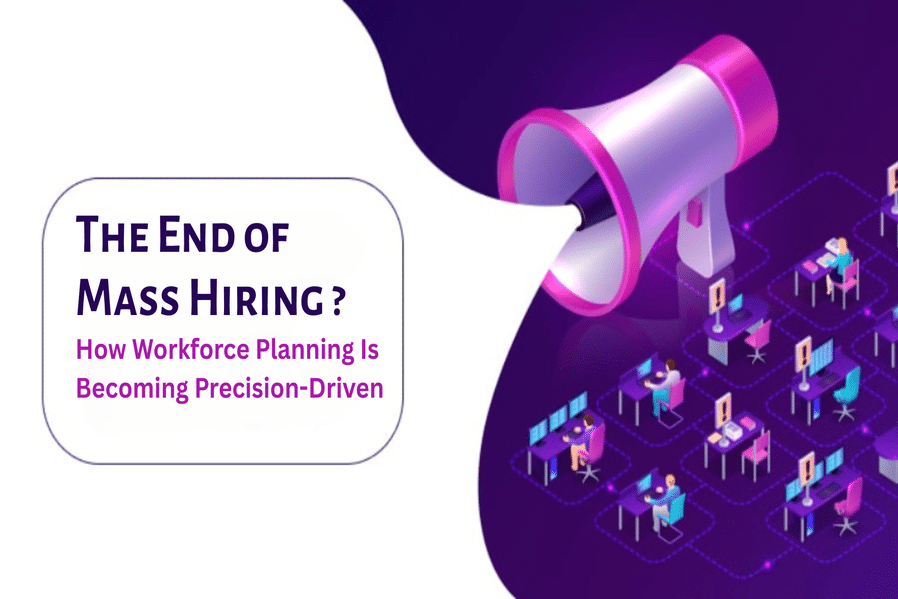
The Decline of Traditional Mass Hiring Models –
Mass hiring once symbolized growth and market dominance, but this approach is increasingly misaligned with today’s business realities. Rapid technological change, evolving job roles, and unpredictable economic conditions have exposed the inefficiencies of hiring in bulk. Organizations now recognize that hiring large volumes of talent without precise role alignment leads to higher attrition, lower productivity, and inflated operational costs. Businesses are shifting their focus from expanding headcount to optimizing workforce effectiveness. Leaders are questioning whether every role truly requires a full-time hire or if skills can be shared, automated, or sourced differently. This marks a fundamental shift from quantity-based hiring to value-driven workforce design.
Key factors driving the decline:
- Rising costs of recruitment, onboarding, and training
- Increased employee turnover due to poor role fit
- Growing emphasis on productivity and ROI per hire
Precision-Driven Workforce Planning Explained –
Precision-driven workforce planning is a strategic approach that aligns hiring decisions directly with business goals and future skill requirements. Instead of reacting to immediate vacancies, organizations proactively forecast talent needs based on growth plans, digital transformation goals, and market trends. This method emphasizes hiring for specific outcomes rather than generic job descriptions. It also integrates workforce data, performance metrics, and business intelligence to guide decisions. As a result, HR evolves from a support function into a strategic partner. Precision planning ensures the right talent is available at the right time without unnecessary workforce expansion.
Core elements of precision planning:
- Data-backed demand forecasting
- Role-specific skill mapping
- Long-term workforce scenario planning
The Growing Importance of Skills-Based Hiring –
As job roles evolve rapidly, traditional qualifications such as degrees and job titles are losing relevance. Skills-based hiring enables organizations to focus on practical capabilities rather than formal credentials. This approach expands talent pools, encourages diversity, and improves job performance. Precision-driven hiring evaluates candidates on demonstrated skills, adaptability, and learning potential. It also supports internal mobility by identifying transferable skills within the existing workforce. By prioritizing skills, companies reduce mismatches and ensure hires can contribute immediately. This shift represents a move toward a more agile and inclusive workforce model.
Advantages of skills-based hiring:
- Improved candidate-role alignment
- Faster onboarding and productivity
- Better internal talent utilization
Technology as the Enabler of Precision Workforce Planning –
Advanced technologies play a crucial role in enabling precision-driven workforce strategies. Workforce analytics platforms analyze employee data to identify trends in performance, attrition, and skill gaps. Artificial intelligence supports predictive hiring by forecasting future talent needs. HR teams can simulate multiple business scenarios and adjust hiring plans accordingly. Automation reduces administrative burden, allowing HR to focus on strategic initiatives. Technology also enables real-time visibility into workforce capabilities, helping leaders make informed decisions. Without digital tools, precision workforce planning would not be scalable or sustainable.
Key technologies involved:
- Workforce analytics and AI-driven insights
- Skills management and talent intelligence platforms
- Scenario modeling and planning tools
Business Impact of Precision-Driven Workforce Strategies –
Organizations that adopt precision-driven workforce planning experience tangible business benefits. Targeted hiring reduces recruitment costs and minimizes workforce redundancy. Employees hired for well-defined roles demonstrate higher engagement and retention. Teams become more agile, adapting quickly to changing market demands. Precision planning also supports better budget control by aligning workforce investment with strategic priorities. Over time, this approach strengthens organizational resilience and competitiveness. Businesses no longer grow by adding people indiscriminately but by maximizing the impact of every hire.
Measurable outcomes include:
- Lower attrition and hiring costs
- Higher workforce productivity
- Improved organizational agility
Conclusion –
The era of mass hiring is coming to an end, replaced by a smarter, more intentional approach to workforce planning. Precision-driven strategies enable organizations to hire with purpose, optimize existing talent, and respond effectively to constant change. By leveraging data, technology, and skills-based models, businesses can build leaner yet more capable teams. In a competitive and uncertain environment, success will no longer depend on how many people a company hires—but on how precisely it plans its workforce.