
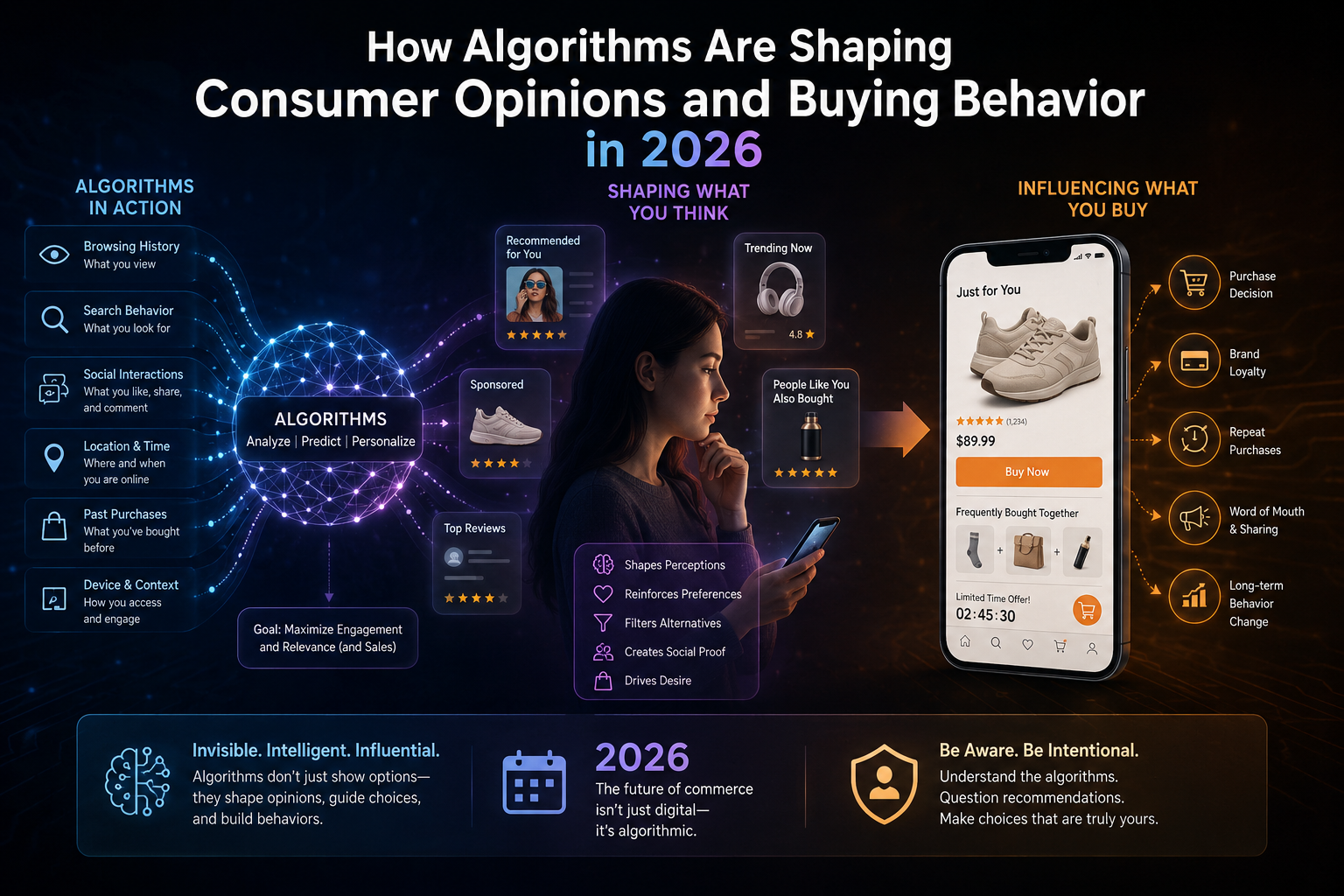
In 2026, algorithms have become one of the most powerful forces influencing how consumers think, interact, and make purchasing decisions online. Every major digital platform, from social media networks to e-commerce websites, now relies heavily on AI-driven algorithms to personalize user experiences. These systems analyze browsing behavior, search history, engagement patterns, watch time, and even emotional reactions to determine what content users see first. As a result, consumers are no longer discovering products naturally; instead, products are being strategically presented to them through predictive recommendation systems. Platforms such as Instagram, TikTok, YouTube, Amazon, and Google use advanced machine learning models to maximize engagement and conversions. This has significantly changed the relationship between brands and consumers because visibility now depends more on algorithmic preference than traditional advertising.
Key Highlights:
- Algorithms personalize nearly every online experience.
- AI systems track user behavior to predict interests.
- Social media feeds heavily influence product discovery.
- Engagement-based content receives maximum visibility.
- Consumer decisions are increasingly data-driven.
Social Media Algorithms and Consumer Psychology-
Social media algorithms have evolved beyond simple content recommendations and now directly influence consumer psychology and behavior. Platforms prioritize emotionally engaging content because it keeps users active for longer periods, increasing advertising revenue and platform activity. In 2026, viral trends spread faster than ever because algorithms amplify content that generates reactions such as excitement, fear, controversy, or curiosity. This creates a powerful psychological loop where consumers repeatedly engage with highly stimulating content. As a result, purchasing decisions are increasingly emotional rather than rational. Influencer marketing has also become deeply tied to algorithmic visibility, allowing creators to shape public opinion more effectively than traditional advertisements. Consumers often trust influencers because algorithm-driven feeds create a sense of familiarity and repeated exposure. Additionally, short-form videos dominate digital engagement due to their ability to rapidly capture attention.
Key Highlights:
- Emotional content performs better algorithmically.
- Viral trends strongly impact consumer decisions.
- Influencer marketing depends on algorithm reach.
- Repeated exposure increases consumer trust.
E-Commerce Algorithms and Personalized Shopping-
E-commerce platforms in 2026 use sophisticated algorithms to create highly personalized shopping experiences for consumers. Online stores analyze massive amounts of customer data, including purchase history, browsing behavior, product comparisons, cart activity, and spending habits. This allows platforms to recommend products with remarkable accuracy. Consumers are often shown products they are likely to purchase before they even actively search for them. Dynamic pricing algorithms also influence purchasing decisions by adjusting product prices based on demand, user behavior, competition, and market trends. Personalized email campaigns, targeted advertisements, and AI-powered recommendations now play a major role in driving online sales. Retail giants such as Amazon and Alibaba have demonstrated how predictive algorithms can significantly increase customer retention and revenue generation.
Key Highlights:
- Personalized recommendations increase conversions.
- AI predicts future purchasing behavior.
- Dynamic pricing affects buying decisions.
- E-commerce platforms collect detailed user data.
The Ethical Concerns Behind Algorithmic Influence-
While algorithms offer convenience and personalization, they also raise serious ethical concerns in the digital age. One major issue is the creation of “filter bubbles,” where users are repeatedly exposed to similar opinions, products, and viewpoints. This limits diverse thinking and can manipulate public perception over time. In 2026, concerns about algorithmic bias, misinformation, and digital addiction have become major discussions among marketers, governments, and technology experts. Many platforms prioritize engagement over accuracy, which can unintentionally promote misleading or sensationalized content. Consumers are also becoming increasingly aware of how algorithms manipulate attention and emotional behavior to maximize screen time. Data privacy remains another critical concern because companies collect enormous amounts of personal information to improve algorithm performance. Governments worldwide are introducing stricter digital regulations to improve transparency and protect consumer rights.
Key Highlights:
- Filter bubbles limit diverse perspectives.
- Algorithms can unintentionally spread misinformation.
- Digital addiction concerns are increasing globally.
The Future of Marketing in an Algorithm-Dominated World-
As algorithms continue to evolve, the future of digital marketing will become increasingly dependent on AI-driven personalization and predictive analytics. Businesses in 2026 are shifting from traditional mass marketing strategies toward highly targeted and behavior-based marketing campaigns. Understanding algorithm behavior is now considered a core marketing skill because digital visibility depends heavily on platform optimization. Brands are investing more in authentic storytelling, community engagement, and high-quality content because modern algorithms reward meaningful interactions over simple promotional messaging. AI tools are also helping marketers analyze customer behavior faster and create personalized campaigns at scale. However, competition for digital attention is becoming more intense as every brand fights for visibility within crowded online ecosystems. Consumers are also becoming smarter and more selective about the content they engage with online.
Key Highlights:
- AI-driven marketing is becoming the industry standard.
- Predictive analytics improve campaign performance.
- Authentic content performs better online.
Conclusion –
Algorithms are no longer just technical systems operating behind digital platforms; they have become powerful forces shaping modern consumer behavior, opinions, and purchasing decisions in 2026. From social media feeds and influencer content to personalized shopping experiences and targeted advertisements, algorithms influence nearly every stage of the consumer journey. While they provide convenience, personalization, and faster product discovery, they also raise concerns regarding privacy, misinformation, emotional manipulation, and ethical marketing practices. Businesses that understand algorithmic trends can build stronger digital strategies and maintain a competitive advantage in an increasingly AI-driven marketplace.