
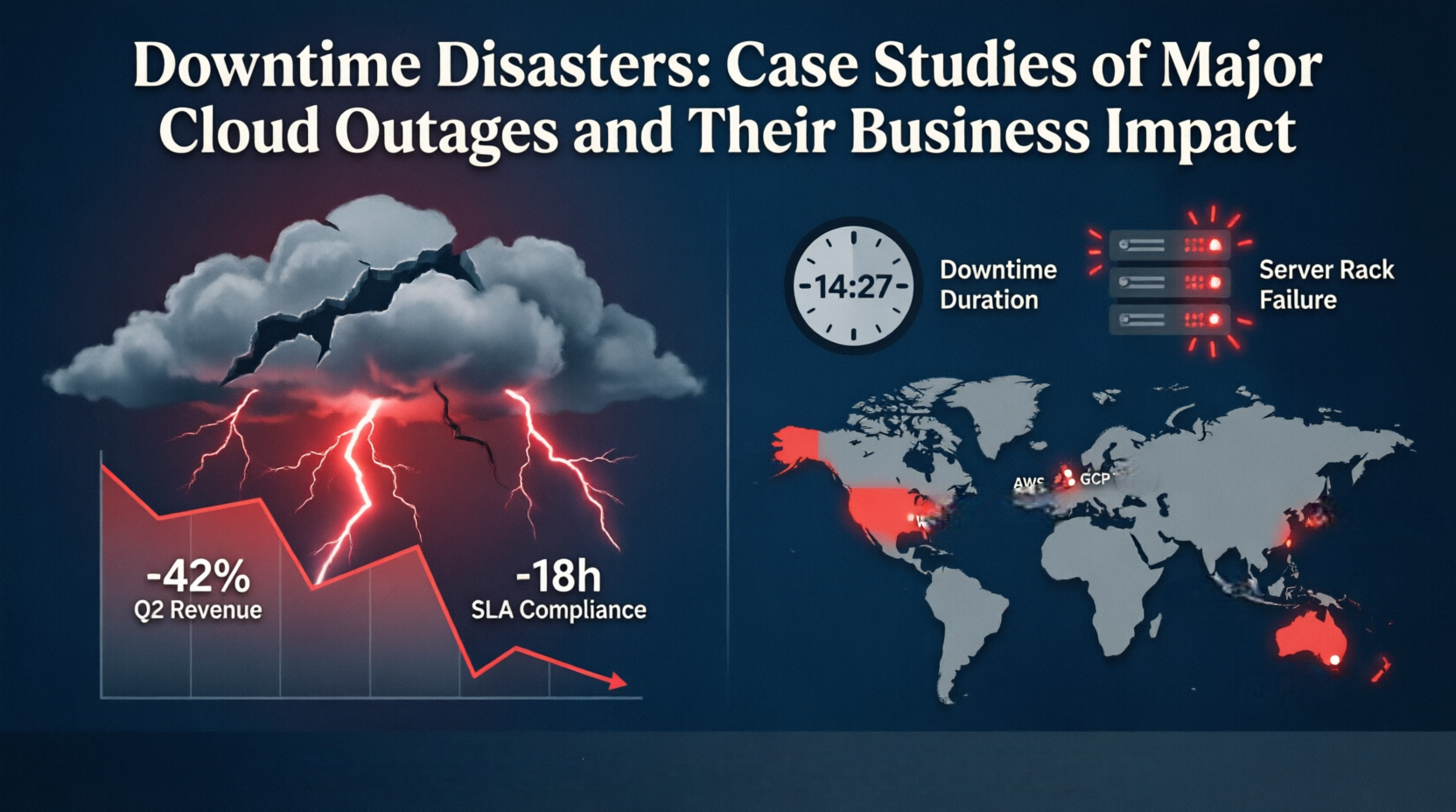
Introduction: The High Cost of Cloud Downtime –
Cloud computing platforms such as Amazon Web Services and Microsoft Azure have become the backbone of modern digital infrastructure. Businesses today rely heavily on these platforms for hosting applications, storing data, and delivering services globally. However, when these systems go down, the consequences can be immediate and severe. Even a few minutes of downtime can lead to financial losses, reputational damage, and operational chaos. Organizations often assume cloud providers guarantee near-perfect uptime, but real-world incidents show otherwise. Downtime is not just a technical issue—it is a business risk that impacts customers, partners, and stakeholders. As dependency on cloud systems grows, so does the scale of disruption during outages.
Key Points:
- Cloud platforms are critical for modern business operations
- Downtime affects revenue, trust, and productivity
- Even major providers are not immune to outages
Case Study: AWS Outage and Its Ripple Effects –
One of the most notable cloud failures involved Amazon Web Services, which experienced a significant outage affecting multiple services and regions. This incident disrupted major platforms like Netflix and Airbnb, demonstrating how deeply interconnected modern systems are. The root cause was linked to internal configuration errors, which cascaded across dependent services. Businesses relying on AWS faced service interruptions, customer complaints, and loss of transactions. The outage revealed the risks of over-reliance on a single cloud provider without redundancy. It also highlighted how even minor internal failures can escalate into global disruptions.
Key Points:
- AWS outage impacted multiple global services
- Configuration errors triggered widespread disruption
- Businesses lost revenue and customer trust
Case Study: Microsoft Azure Authentication Failure –
Another major incident occurred with Microsoft Azure, where an authentication system failure prevented users from accessing services. Applications dependent on Azure Active Directory were effectively locked out, causing widespread disruption across enterprises. Organizations using cloud-based tools for communication, collaboration, and operations were unable to function normally. This outage demonstrated how identity systems are a critical single point of failure in cloud ecosystems. The inability to log in halted workflows, delayed projects, and affected customer service delivery. The incident also raised concerns about centralized authentication mechanisms.
Key Points:
- Authentication failure blocked access to critical services
- Identity systems can become single points of failure
- Enterprises faced operational paralysis
Business Impact: Financial and Reputational Damage –
Cloud outages have far-reaching consequences beyond technical disruption. Companies suffer direct financial losses due to halted transactions and missed opportunities. Customer dissatisfaction increases when services become unavailable, leading to churn and negative brand perception. For example, outages affecting platforms like Shopify can prevent thousands of businesses from making sales simultaneously. Additionally, internal productivity declines as employees are unable to access tools and data. Long-term reputational damage can be even more costly than immediate losses. Businesses must also deal with regulatory and compliance risks when outages impact data availability.
Key Points:
- Revenue loss from interrupted services
- Customer trust and brand reputation suffer
- Productivity declines across organizations
Prevention and Resilience Strategies –
To mitigate the risks of downtime, organizations must adopt proactive strategies. Multi-cloud and hybrid cloud approaches reduce dependency on a single provider and improve resilience. Implementing robust monitoring systems helps detect issues early and minimize impact. Disaster recovery planning ensures that systems can be restored quickly after failures. Companies are also investing in redundancy, failover systems, and distributed architectures. Learning from past incidents, businesses now prioritize resilience as a core part of IT strategy. Cloud providers continue to improve reliability, but responsibility is shared with customers.
Key Points:
- Multi-cloud strategies improve reliability
- Monitoring systems enable early detection
- Disaster recovery plans reduce downtime impact
Conclusion –
Cloud outages are an unavoidable reality in today’s digital landscape, even with advanced infrastructure and global providers. Real-world incidents involving platforms like Amazon Web Services and Microsoft Azure demonstrate that no system is completely immune to failure. The business impact of downtime extends far beyond technical inconvenience, affecting revenue, customer trust, and long-term growth. Organizations must move beyond blind reliance on cloud providers and take responsibility for their own resilience strategies.