
Understanding Algorithmic Management in Modern Workplaces –
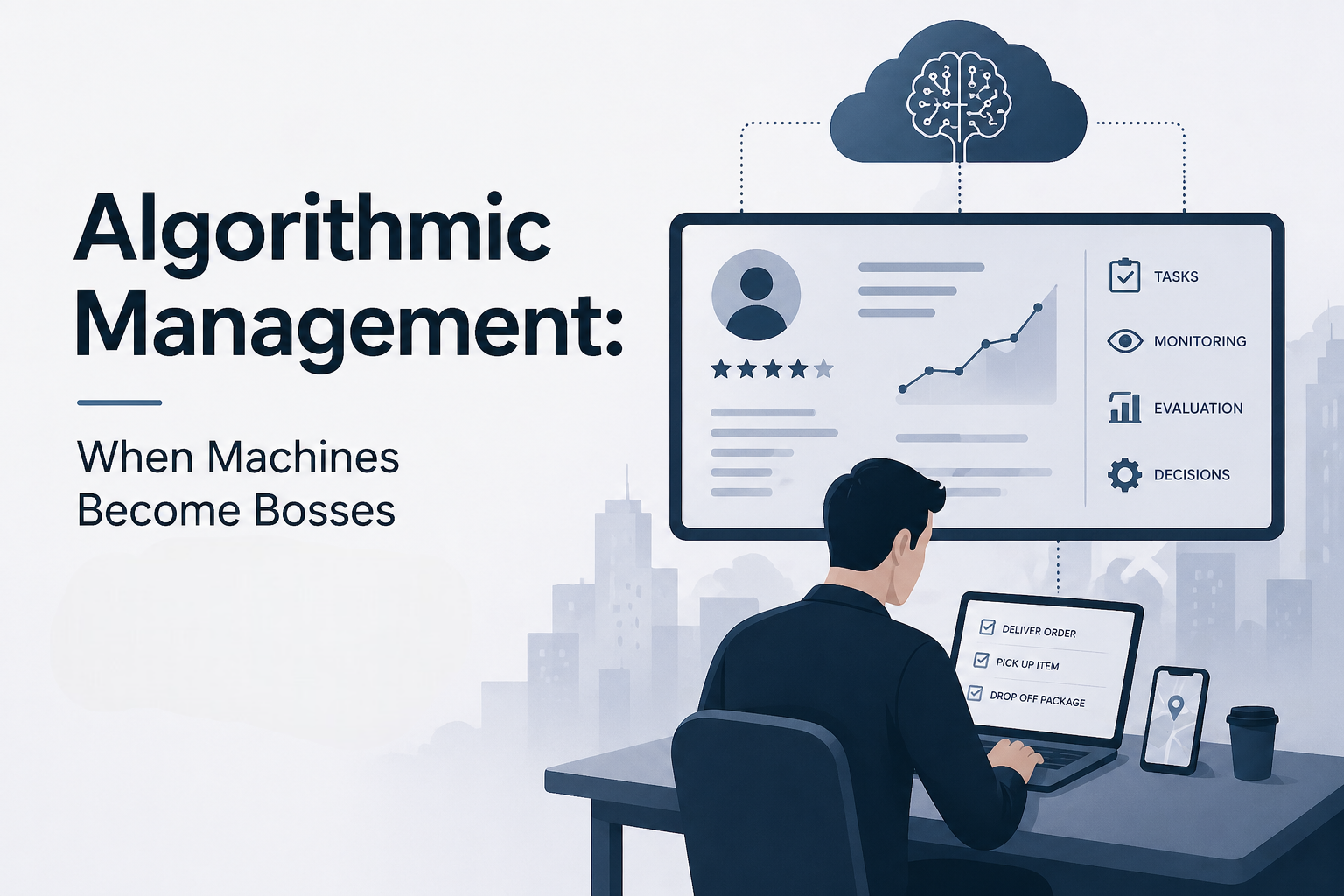
Algorithmic management refers to the use of software, data analytics, and artificial intelligence to assign tasks, monitor performance, and make workplace decisions with minimal human intervention. What began in gig platforms has now spread across industries such as logistics, customer service, finance, and even corporate offices. Employees today may not report directly to a human supervisor but instead follow instructions generated by systems that analyze behavior, productivity, and efficiency. This shift is redefining traditional management structures and raising fundamental questions about authority and accountability. Unlike human managers, algorithms operate continuously, processing vast amounts of data in real time.
Key elements include:
- Automated task allocation based on data patterns
- Real-time performance tracking and evaluation
- Minimal human intervention in decision-making
The Rise of Data-Driven Decision Making –
Organizations are increasingly relying on data to eliminate bias, improve productivity, and streamline operations. Algorithmic systems can analyze employee output, attendance, communication patterns, and even behavioral signals to make decisions that were traditionally handled by managers. This has created a workplace where decisions are often faster and seemingly more objective. However, the assumption that data-driven decisions are inherently fair is being questioned. Algorithms are only as unbiased as the data they are trained on, and historical inequalities can easily be embedded into these systems. Employees may not fully understand how decisions about promotions, shifts, or even terminations are being made. This lack of transparency can lead to mistrust and disengagement.
Impacts of data-driven management:
- Faster and scalable decision-making processes
- Reduced reliance on subjective human judgment
- Risk of hidden biases within algorithms
Employee Experience Under Algorithmic Control –
For employees, working under algorithmic management can feel both empowering and restrictive. On one hand, clear performance metrics provide transparency on expectations and outcomes. On the other, constant monitoring can create pressure and reduce autonomy. Workers may feel like they are being watched at all times, leading to stress and reduced job satisfaction. The absence of human interaction in decision-making can also make feedback feel impersonal and rigid. Employees often struggle to challenge decisions made by algorithms, as there is no clear authority to appeal to. This can weaken trust between employees and organizations. Additionally, creativity and innovation may suffer when individuals focus only on meeting measurable targets.
Common employee concerns:
- Increased stress due to constant monitoring
- Lack of personalized feedback or empathy
- Difficulty in questioning automated decisions
- Reduced sense of autonomy and control
Ethical and Legal Challenges for Organizations –
The adoption of algorithmic management introduces complex ethical and legal considerations. Organizations must address concerns around data privacy, consent, and fairness. Employees may not always be aware of how their data is being collected or used, which raises serious transparency issues. In some regions, regulations are beginning to address these concerns, but policies are still evolving. There is also the risk of discrimination if algorithms unintentionally favor certain groups over others. Companies could face legal consequences if their systems are found to be biased or non-compliant. Beyond legality, there is a broader ethical question about how much control technology should have over human work.
Key challenges include:
- Data privacy and employee consent issues
- Potential algorithmic bias and discrimination
- Lack of regulatory clarity in many regions
The Future of Work: Balancing Humans and Machines –
As algorithmic management continues to evolve, the future of work will depend on finding the right balance between technology and human leadership. Machines can process data and optimize systems, but they cannot replace human judgment, empathy, and ethical reasoning. Organizations that rely too heavily on algorithms risk creating environments that feel mechanical and disengaging. On the other hand, ignoring technological advancements can lead to inefficiencies and lost competitiveness. The goal should be to use algorithms as tools that support, rather than replace, human managers. This requires redesigning roles, training leaders, and redefining what effective management looks like in a digital age.
Future focus areas:
- Integrating human judgment with algorithmic insights
- Building transparent and explainable systems
- Training managers to work alongside technology
Conclusion –
Algorithmic management is not just a technological shift—it is a fundamental transformation of how work is structured, monitored, and evaluated. While it offers efficiency, scalability, and data-driven precision, it also introduces significant challenges related to ethics, transparency, and employee experience. Organizations that embrace this model without considering its human impact risk creating disengaged and distrustful workforces. The future lies in thoughtful integration, where machines enhance decision-making but do not replace human values. HR leaders must act as the bridge between technology and people, ensuring that innovation does not come at the cost of fairness and dignity.