
Adapting to Technological Disruption-
In today’s business environment, technology is evolving faster than ever before, and companies that fail to adapt quickly risk losing relevance. Artificial intelligence, automation, and digital platforms are reshaping how businesses operate, communicate, and deliver value. Customers now expect faster service, smarter solutions, and seamless digital experiences. Businesses must continuously evaluate new tools and technologies to stay efficient and competitive. Relying on outdated systems or traditional methods can slow down growth and reduce market share. Companies that embrace innovation early often gain a significant advantage over competitors. The ability to experiment, adopt, and scale new technologies is becoming a key success factor.
Key Ways to Adapt to Technology:
- Invest in AI and automation tools
- Upgrade outdated systems regularly
- Train employees on new technologies
Understanding Changing Customer Expectations-
Customer behavior is changing rapidly due to increased digital exposure and access to information. Modern consumers expect personalization, speed, transparency, and convenience in every interaction. They compare brands instantly online and switch easily if their expectations are not met. Businesses must focus on understanding customer needs deeply rather than just promoting products. Data analytics and customer feedback play a major role in identifying behavior patterns. Companies that fail to meet evolving expectations risk losing customer trust and loyalty. On the other hand, businesses that consistently deliver value build long-term relationships and stronger brand equity.
Key Customer Expectations:
- Fast and responsive service
- Personalized experiences
- Transparent communication
- Seamless digital journeys
Building a Strong Digital Presence-
A strong digital presence is no longer optional; it is essential for survival in a competitive market. Customers discover, evaluate, and engage with brands primarily online. Businesses that invest in digital marketing, SEO, social media, and content creation are more likely to stay visible and relevant. A well-structured online presence helps attract new customers while retaining existing ones. It also builds trust and credibility in a crowded marketplace. Companies should focus on creating valuable content and maintaining consistent branding across all platforms. Without a strong digital footprint, even high-quality businesses can struggle to grow.
Key Elements of Digital Presence:
- Search engine optimization (SEO)
- Active social media engagement
- High-quality content marketing
Focusing on Innovation and Continuous Improvement-
Innovation is a critical driver of long-term competitiveness. Businesses that continuously improve their products, services, and processes are better positioned to stay ahead of competitors. Innovation does not always mean creating something entirely new; it can also involve improving existing offerings or finding more efficient ways to operate. Companies that encourage creativity and experimentation often discover new opportunities for growth. Regular performance evaluation helps identify gaps and areas for improvement. Organizations that resist change often struggle to survive in dynamic markets. A culture of continuous improvement ensures long-term sustainability and relevance.
Ways to Encourage Innovation:
- Promote a culture of experimentation
- Gather and implement customer feedback
- Improve processes regularly
Strengthening Customer Relationships and Retention-
In a rapidly changing market, retaining existing customers is often more cost-effective than acquiring new ones. Loyal customers provide stable revenue, repeat purchases, and valuable referrals. Businesses must focus on building strong relationships through consistent communication and excellent service. Personalized marketing and loyalty programs can significantly improve customer engagement. Companies that prioritize customer satisfaction create emotional connections that are difficult for competitors to break. Strong customer relationships also provide valuable insights for future improvements. Retention strategies help businesses maintain stability even during uncertain market conditions.
Key Retention Strategies:
- Personalized customer experiences
- Loyalty and reward programs
- Proactive customer support
Conclusion-
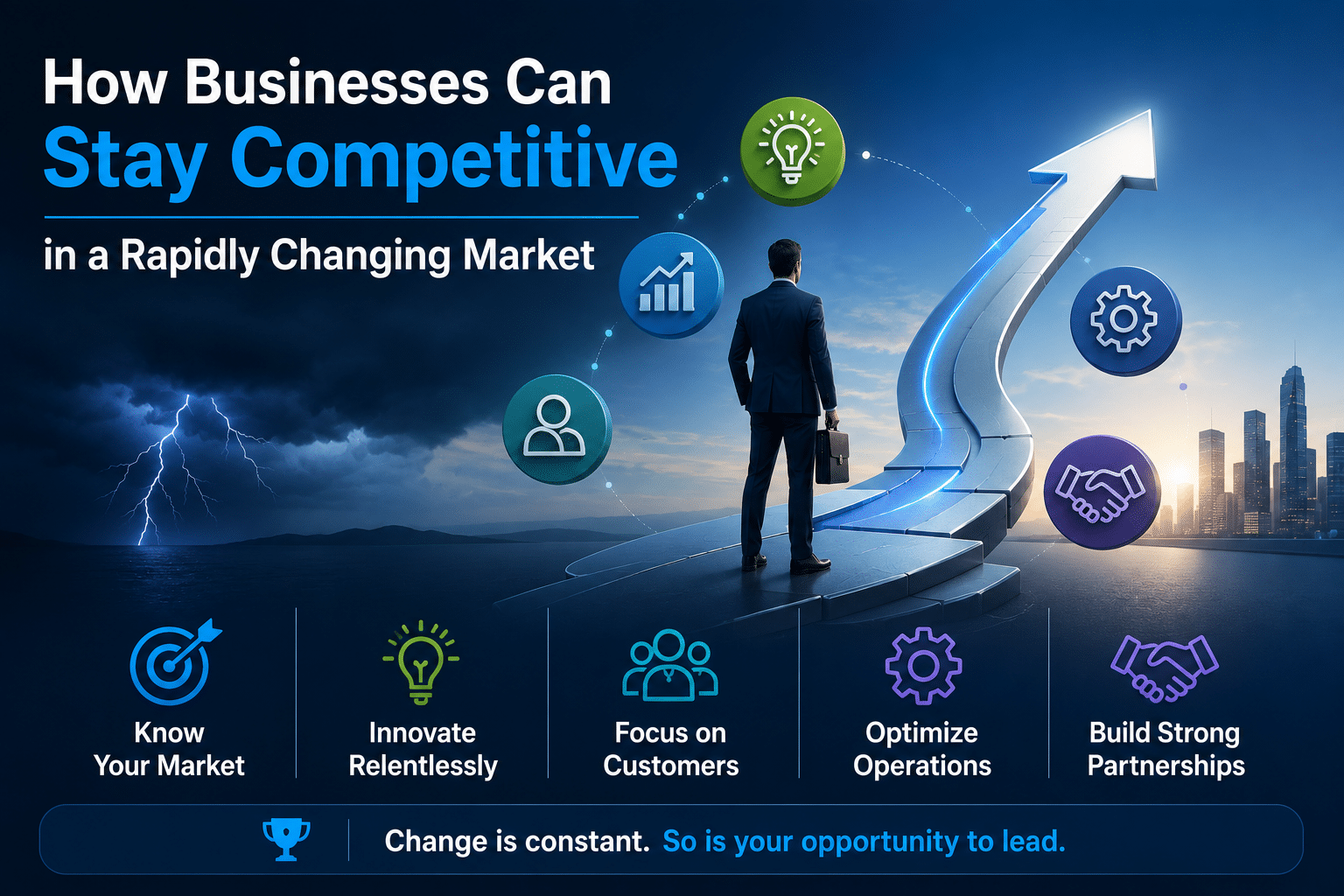
Staying competitive in a rapidly changing market requires more than just offering a good product or service. Businesses must continuously adapt to technological advancements, evolving customer expectations, and shifting market dynamics. A strong digital presence, a focus on innovation, and effective customer relationship management are essential pillars of long-term success. Companies that embrace change and prioritize continuous improvement are more likely to thrive in uncertain environments. Ultimately, the ability to stay flexible, customer-focused, and innovation-driven determines whether a business merely survives or truly succeeds in the modern economy.