
Introduction-
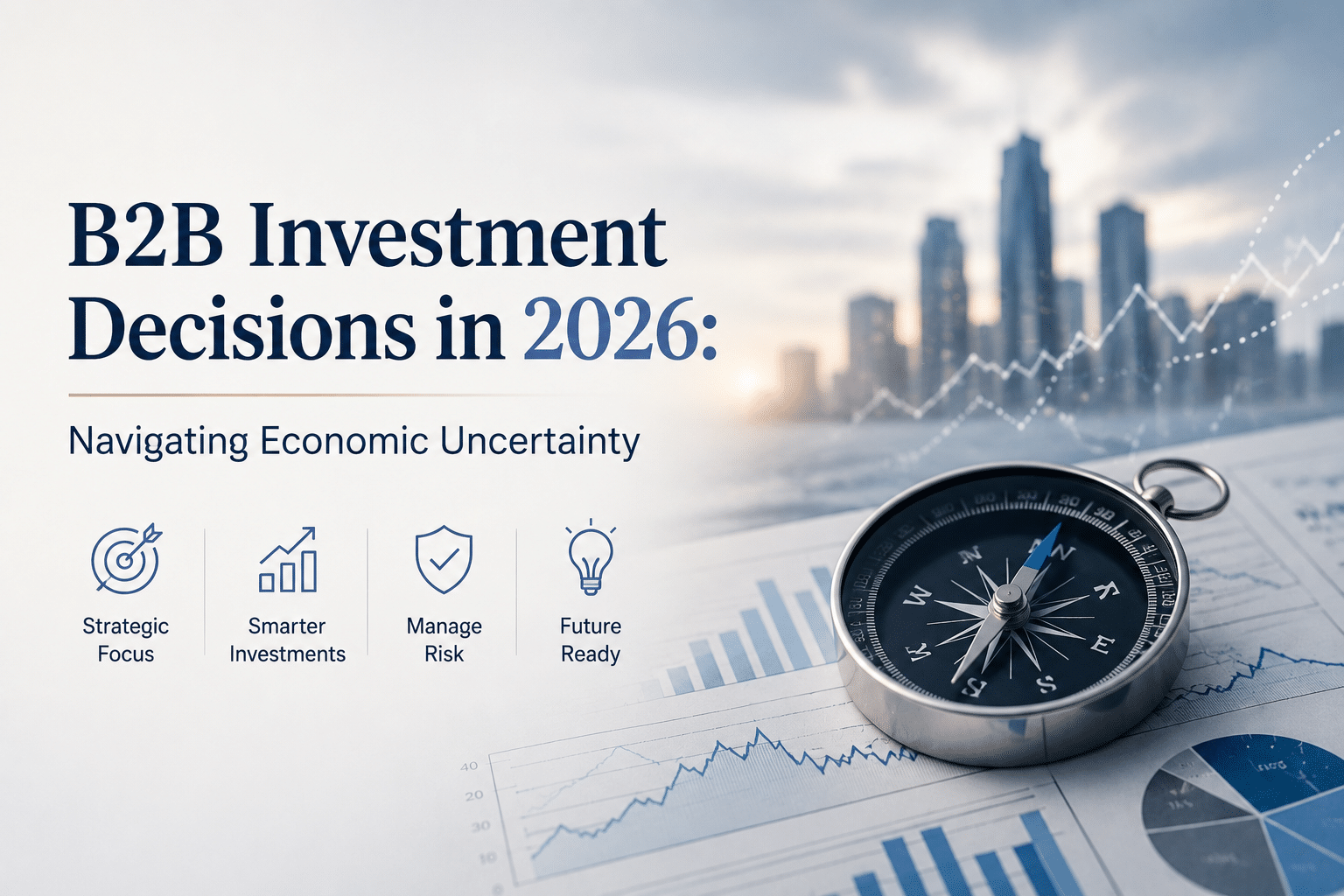
Economic uncertainty has become a defining challenge for B2B organizations in 2026. Rising operational costs, geopolitical tensions, evolving trade regulations, and rapid technological advancements are creating a complex business environment. While some companies are tightening budgets and delaying expansion plans, others are strategically investing in innovation to gain a competitive advantage.
The challenge for business leaders is no longer whether to invest, but where to invest. In a volatile market, every investment decision must balance risk, resilience, and long-term growth potential. Organizations that adopt a strategic, data-driven approach are better positioned to navigate uncertainty and capitalize on emerging opportunities.
AI and Automation Continue to Attract Investment-
Artificial Intelligence (AI) and automation remain among the most attractive investment areas for B2B companies in 2026. Businesses are leveraging these technologies to improve productivity, reduce operational costs, and enhance decision-making capabilities. AI-powered tools can automate repetitive tasks, analyze large volumes of data, and provide valuable insights that support strategic planning. Organizations across industries are implementing intelligent solutions to improve customer service, optimize workflows, and streamline internal processes. While economic uncertainty may lead to tighter budgets, many executives view AI investments as essential rather than optional. Companies that successfully integrate AI into their operations are often better equipped to respond to market changes and improve overall efficiency. The focus is shifting from experimentation to practical implementation with measurable returns on investment.
Popular AI investment areas include:
- Customer service automation and virtual assistants.
- Predictive analytics and business intelligence.
- Sales and marketing automation tools.
- Intelligent document and workflow management.
Cybersecurity Has Become a Strategic Investment Priority-
As businesses continue to expand their digital presence, cybersecurity has evolved from an IT concern into a critical business priority. The increasing frequency of cyberattacks, data breaches, and regulatory requirements has encouraged organizations to invest heavily in protecting their digital assets. In 2026, cybersecurity is viewed as a necessary investment to maintain customer trust, ensure compliance, and protect business continuity. Companies are implementing advanced security frameworks, strengthening access controls, and training employees to identify potential threats. The growing adoption of cloud technologies and remote work models has further increased the need for comprehensive security strategies. Businesses understand that the financial and reputational costs of a cyber incident can far exceed the investment required for prevention. As a result, cybersecurity spending continues to rise across industries.
Key cybersecurity investments include:
- Zero-trust security frameworks.
- Advanced threat detection systems.
- Cloud security and data protection solutions.
- Employee cybersecurity awareness programs.
Data-Driven Decision-Making Is Influencing Investment Strategies-
In an uncertain economy, businesses are increasingly relying on data to guide investment decisions. Rather than making assumptions based on market sentiment, organizations are using analytics and forecasting tools to identify opportunities and assess risks. Access to real-time data enables leaders to evaluate performance, understand customer behavior, and monitor industry trends more effectively. Data-driven decision-making helps organizations allocate resources more efficiently and improve investment outcomes. Companies are also using predictive analytics to anticipate future market changes and prepare proactive strategies. By leveraging business intelligence platforms, decision-makers can gain deeper insights into financial performance and operational efficiency. This approach reduces uncertainty and supports more confident investment planning.
Building Long-Term Resilience Through Strategic Investments-
While short-term cost management remains important, successful B2B organizations are focusing on investments that build long-term resilience. Economic uncertainty has highlighted the importance of adaptability, innovation, and operational strength. Businesses are investing in digital transformation, workforce development, and supply chain optimization to prepare for future challenges. Rather than reacting to disruptions as they occur, companies are creating strategies that enable them to remain competitive under various market conditions. Investments in employee skills, modern technologies, and flexible business models are helping organizations navigate change more effectively. Leaders recognize that resilience is not achieved through cost-cutting alone but through thoughtful investments that support growth and stability. Companies that prioritize resilience today are more likely to thrive in the future.
Areas supporting long-term resilience include:
- Digital transformation initiatives.
- Workforce training and upskilling programs.
Conclusion-
B2B investment decisions in 2026 are being shaped by a combination of economic uncertainty, technological advancement, and evolving market demands. While businesses face increased pressure to control costs and manage risks, they must also continue investing in areas that drive innovation and long-term growth. AI, cybersecurity, data analytics, and resilience-focused initiatives have emerged as top priorities for organizations seeking to remain competitive in a rapidly changing environment. The most successful companies are taking a balanced approach—combining financial discipline with strategic investment planning.