
Introduction
HR’s Role in Preventing Insider Security Threats has become increasingly important as organizations embrace digital transformation, cloud computing, artificial intelligence (AI), and hybrid work models. While businesses continue investing in advanced cybersecurity technologies to defend against external attacks, insider threats remain one of the most overlooked security risks.
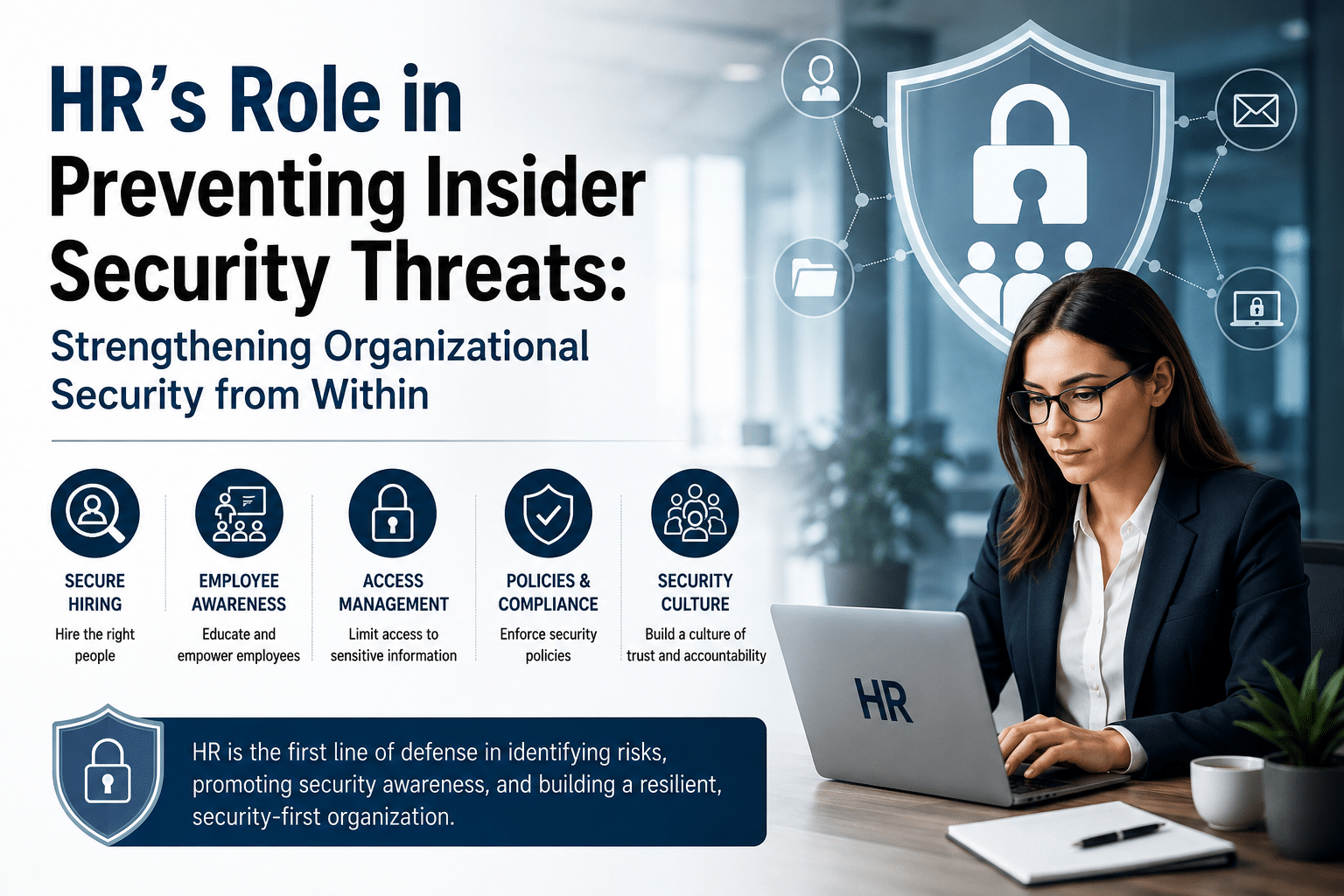
HR’s Role in Preventing Insider Security Threats goes beyond traditional employee management because HR teams are responsible for hiring trustworthy talent, creating security-focused workplace policies, educating employees, and managing secure access throughout the employee lifecycle. By integrating cybersecurity into recruitment, onboarding, training, performance management, and offboarding, HR’s Role in Preventing Insider Security Threats helps organizations reduce the risk of data breaches, unauthorized access, and compliance violations.
As cyber threats continue to evolve, understanding HR’s Role in Preventing Insider Security Threats is essential for building a resilient workforce and protecting valuable business assets.In today’s digital-first business environment, cybersecurity is no longer just the responsibility of the IT department. As organizations adopt cloud technologies, remote work models, and AI-powered business applications, protecting sensitive company information has become a shared responsibility across departments. Among all business functions, Human Resources (HR) plays a particularly important role in reducing insider security threats because it manages the entire employee lifecycle—from recruitment and onboarding to training, performance management, and offboarding.
Unlike external cyberattacks, insider threats originate from individuals who already have authorized access to company systems and confidential data. These threats may result from malicious intent, negligence, or compromised employee accounts. Regardless of the cause, insider incidents can lead to financial losses, regulatory penalties, reputational damage, and operational disruptions. By implementing strong security practices and fostering a culture of accountability, HR can significantly reduce these risks and help build a resilient organization.
Understanding Insider Security Threats
An insider security threat occurs when someone with legitimate access to an organization’s resources intentionally or unintentionally compromises its security. While many organizations invest heavily in firewalls, antivirus software, and network monitoring tools, human behavior remains one of the most difficult aspects of cybersecurity to manage. Employees may unknowingly click phishing links, mishandle confidential information, or intentionally misuse company resources for personal gain. This makes insider threat prevention an area where HR’s involvement is both strategic and essential.
Common Types of Insider Threats
| Insider Threat Type | Description | Example |
|---|---|---|
| Malicious Insider | An employee intentionally abuses authorized access for personal gain or revenge. | Stealing customer databases or leaking confidential business information. |
| Negligent Insider | An employee unintentionally exposes sensitive information due to poor security practices. | Clicking phishing emails, using weak passwords, or sending confidential files to the wrong recipient. |
| Compromised Insider | A cybercriminal gains control of a legitimate employee account through stolen credentials or malware. | Hackers accessing company systems using an employee’s compromised login credentials. |
Why HR Plays a Critical Role
Human Resources interacts with employees at every stage of their journey within an organization. This gives HR unique visibility into employee behavior, organizational culture, and workforce management practices. By collaborating closely with IT and cybersecurity teams, HR can establish policies and procedures that minimize insider risks before they become security incidents.
The hiring process, for example, provides an opportunity to conduct background verification and assess candidates for roles that require access to sensitive information. During onboarding, HR introduces employees to company policies, security expectations, and compliance requirements. Throughout employment, HR coordinates cybersecurity awareness programs and promotes responsible workplace behavior. Finally, during employee exits, HR ensures that access to company systems is revoked promptly, reducing the risk of unauthorized access after departure.
Building a Security-Aware Workforce
Technology alone cannot eliminate insider threats. Organizations need employees who understand their responsibility in protecting sensitive business information. HR plays a vital role in developing a security-first culture by making cybersecurity awareness an ongoing part of the employee experience rather than a one-time training session.
Regular awareness campaigns, phishing simulations, interactive workshops, and role-specific training help employees recognize evolving cyber threats and respond appropriately. Encouraging employees to report suspicious emails, unauthorized access attempts, or unusual system behavior without fear of blame creates an environment where security becomes everyone’s responsibility.
Secure Hiring and Employee Onboarding
Preventing insider threats begins long before an employee receives access to company systems. HR should implement comprehensive hiring practices that include identity verification, employment history checks, educational qualification validation, professional reference checks, and role-specific background screening where appropriate.
Once employees join the organization, onboarding should include cybersecurity awareness alongside standard HR orientation. New hires should understand password policies, multi-factor authentication requirements, acceptable use guidelines, data privacy regulations, remote work security practices, and procedures for reporting security incidents. Establishing these expectations early helps employees adopt secure work habits from their first day.
Managing Employee Access Throughout the Employment Lifecycle
One of the most effective ways to reduce insider threats is by ensuring employees only have access to the systems and information necessary for their roles. HR should work closely with IT departments to maintain accurate employee records, promptly update access permissions following promotions or departmental transfers, and regularly review user privileges.
Similarly, structured offboarding procedures are essential when employees leave the organization. HR should coordinate with IT to deactivate accounts immediately, recover company-issued devices, revoke application access, and remind departing employees of confidentiality obligations. These measures help prevent unauthorized access after employment ends and reduce opportunities for data theft.
Leveraging AI and HR Analytics
Artificial Intelligence is transforming how organizations identify potential insider risks. Modern security platforms can analyze user behavior to detect unusual login patterns, abnormal file downloads, unauthorized access attempts, or suspicious data transfers. HR can complement these technologies by providing context around organizational changes, employee role transitions, or policy updates while ensuring monitoring practices comply with privacy regulations and employment laws.
In addition, HR analytics can identify trends related to employee engagement, turnover, absenteeism, and workplace satisfaction. Although these indicators should never be used to make assumptions about individual employees, they can help organizations recognize broader workforce issues that may increase operational or security risks.
Best Practices for HR to Prevent Insider Security Threats
| HR Practice | Security Benefit |
|---|---|
| Conduct thorough background verification | Reduces hiring-related security risks |
| Include cybersecurity in onboarding | Builds secure habits from day one |
| Provide continuous security awareness training | Keeps employees informed about emerging cyber threats |
| Collaborate with IT and security teams | Strengthens access management and policy enforcement |
| Implement role-based access control | Limits unnecessary access to sensitive information |
| Automate employee onboarding and offboarding | Ensures timely account provisioning and deactivation |
| Promote employee engagement and transparent communication | Encourages responsible behavior and reduces workplace dissatisfaction |
| Review HR and security policies regularly | Keeps security practices aligned with evolving business needs |
The Future of HR in Enterprise Cybersecurity
As organizations continue adopting AI-powered business applications, hybrid work environments, and cloud-based HR systems, the partnership between HR and cybersecurity teams will become increasingly important. HR departments are expected to play a larger role in identity management, cybersecurity governance, employee risk education, and compliance with evolving data protection regulations.
Future HR functions will rely more heavily on AI-driven learning platforms, automated identity lifecycle management, predictive workforce analytics, and behavioral insights to strengthen organizational security while maintaining employee trust. Rather than serving only administrative functions, HR is becoming a strategic contributor to enterprise resilience and business continuity.
Conclusion
Insider security threats remain one of the most challenging risks facing modern organizations because they involve trusted individuals with legitimate access to business systems and sensitive information. While advanced cybersecurity technologies provide important protection, they cannot replace effective people management and a strong organizational culture.
Human Resources plays a central role in preventing insider threats by hiring responsibly, educating employees, managing access throughout the employment lifecycle, and promoting a culture where security is everyone’s responsibility. When HR collaborates closely with IT, legal, and cybersecurity teams, organizations can significantly reduce insider risks while creating a secure, compliant, and resilient workplace prepared for the challenges of the digital era.