
The Emergence of a New Economic Divide –
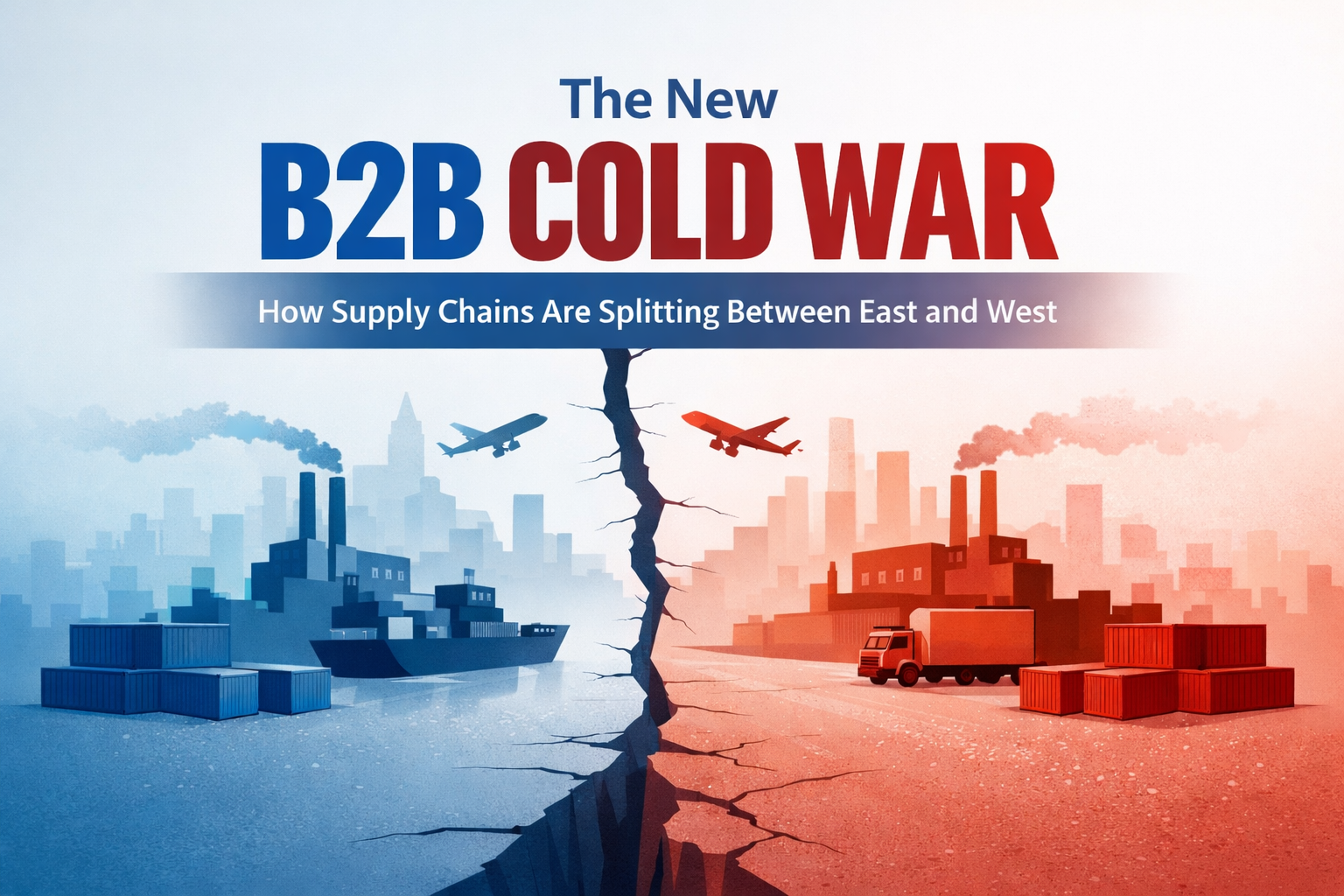
The global business landscape is experiencing a transformation that many experts compare to a modern version of the Cold War. Instead of ideological conflict, the competition today revolves around technology, manufacturing power, and control of supply chains. Over the past few decades, globalization created highly interconnected production networks where companies sourced components from multiple continents. However, geopolitical tensions, trade disputes, and national security concerns are pushing countries to rethink these dependencies. Governments and corporations are now prioritizing resilience over efficiency, which is leading to a gradual split between Eastern and Western supply networks.
Key Drivers of the Divide
- Increasing geopolitical tensions between major economies
- Government policies encouraging domestic manufacturing
- National security concerns around critical technologies
- Trade restrictions and tariffs on strategic products
How Globalization Built Interdependent Supply Chains –
For nearly three decades after the end of the Cold War, globalization allowed companies to design supply chains that spanned the entire world. Manufacturing shifted toward regions with lower costs, while advanced economies focused on design, research, and branding. Countries like China became global manufacturing hubs, supplying components to companies in the United States, Germany, and Japan. This model maximized efficiency and reduced production costs, enabling companies to scale rapidly and serve global markets. However, such interdependence also created vulnerabilities. Events like the COVID-19 Pandemic exposed how fragile global supply networks could be when borders closed, factories shut down, and logistics slowed. Businesses suddenly realized that relying heavily on a single region for critical components could threaten their operations. As a result, organizations began reconsidering their global sourcing strategies.
Characteristics of the Globalized Supply Chain Era
- Production optimized primarily for cost efficiency
- Heavy dependence on Asian manufacturing hubs
- Just-in-time inventory strategies
- Minimal geopolitical risk considerations
The Shift Toward Regionalized Supply Chains –
As geopolitical tensions rise and governments seek greater economic security, businesses are transitioning from globalized supply chains to regionalized networks. This strategy involves sourcing and manufacturing closer to key markets to reduce risk and dependency on distant suppliers. For example, many Western companies are adopting “China+1” strategies, diversifying production into countries such as Vietnam, India, and Mexico. Meanwhile, Asian economies are strengthening regional trade partnerships and investing heavily in local manufacturing capabilities. Governments are also providing incentives to bring strategic industries back home, particularly in sectors such as semiconductors, pharmaceuticals, and defense technologies.
Major Trends in Supply Chain Regionalization
- Nearshoring production closer to major consumer markets
- Diversification of suppliers across multiple countries
- Strategic government subsidies for domestic manufacturing
- Increased investment in regional logistics infrastructure
Technology as the New Strategic Battleground –
In this new economic rivalry, advanced technologies have become the most critical assets in global supply chains. Industries such as semiconductors, artificial intelligence, and telecommunications are now viewed as essential to both economic growth and national security. Companies that control these technologies gain significant strategic influence over global markets. For instance, semiconductor manufacturing—dominated by companies like Taiwan Semiconductor Manufacturing Company and Intel—has become a focal point of geopolitical competition. Governments are investing billions of dollars to secure domestic chip production and reduce reliance on foreign suppliers. At the same time, digital technologies such as supply chain analytics, AI forecasting, and blockchain tracking are transforming how companies manage global operations.
Key Technologies Shaping the New Supply Chain Rivalry
- Advanced semiconductor manufacturing
- Artificial intelligence and automation systems
- 5G and next-generation telecommunications infrastructure
Strategic Implications for B2B Companies –
For B2B organizations, the splitting of global supply chains presents both risks and opportunities. Companies that adapt quickly can gain a competitive advantage by building more resilient and diversified supplier networks. Strategic planning must now consider geopolitical developments, trade regulations, and regional economic alliances. Businesses are increasingly investing in digital supply chain visibility tools to monitor disruptions and optimize logistics. Collaboration with trusted partners is also becoming essential, as companies seek stable long-term relationships rather than purely cost-based supplier choices. In addition, firms must develop contingency plans that allow them to shift production between regions if geopolitical tensions escalate.
Strategic Actions for Modern B2B Firms
- Diversify suppliers across multiple geographic regions
- Invest in digital supply chain monitoring technologies
- Build strategic partnerships with trusted vendors
Conclusion –
The emerging split in global supply chains represents one of the most significant shifts in the modern business environment. Much like the geopolitical rivalry of the Cold War, today’s economic competition is shaping alliances, technological development, and global trade patterns. For B2B companies, this transformation requires a new strategic mindset—one that prioritizes resilience, adaptability, and technological innovation. While globalization once emphasized efficiency and cost reduction, the future will demand balanced supply networks that can withstand geopolitical uncertainty. Businesses that recognize this shift early and proactively redesign their supply chains will be better positioned to thrive in the evolving global economy.