
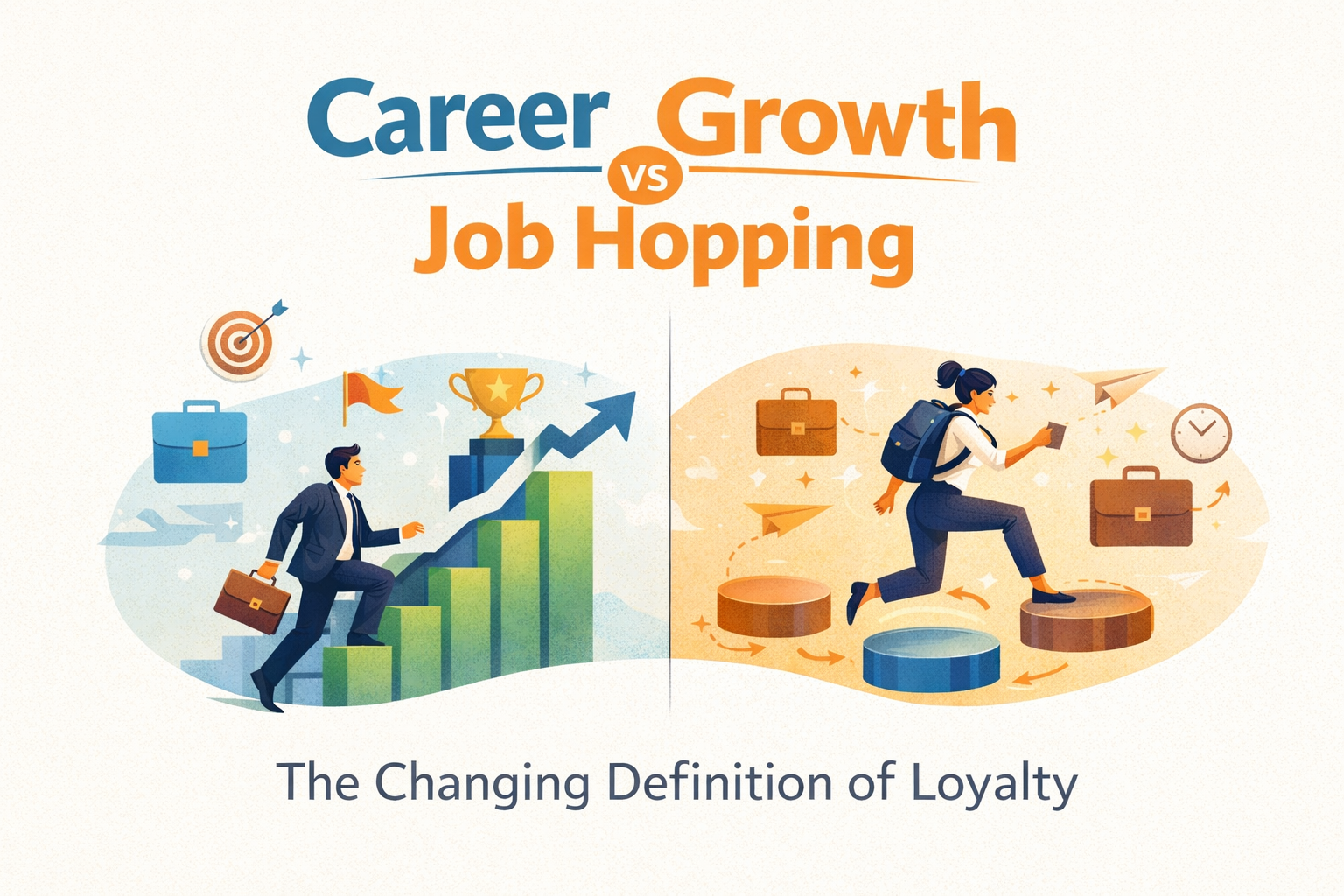
The Shift in Workplace Loyalty: From Long-Term Commitment to Strategic Mobility –
The traditional idea of loyalty—staying with one company for decades—is rapidly fading in today’s dynamic job market. Earlier, employees equated stability with success, often building their entire careers within a single organization. However, modern professionals are redefining loyalty as commitment to personal growth rather than to a single employer. Economic uncertainty, evolving industries, and access to global opportunities have significantly influenced this shift. Employees now prioritize skill development, meaningful work, and better compensation over tenure. Organizations, on the other hand, often struggle to adapt to this new mindset and still expect long-term commitment. This disconnect creates tension between employers and employees.
Key factors driving this shift:
- Rapid technological changes requiring continuous upskilling
- Increased availability of opportunities through digital platforms
- Decline of lifetime employment guarantees
Why Employees Choose Job Hopping Over Traditional Career Paths –
Job hopping is often misunderstood as a lack of commitment, but in reality, it is a strategic decision for many professionals. Employees switch jobs to accelerate their learning curve, gain diverse experiences, and achieve faster salary growth. In many cases, internal promotions and increments fail to match the growth offered by external opportunities. This creates a strong incentive to move frequently. Additionally, toxic work environments, poor management, and lack of recognition push employees to seek better workplaces. Younger generations, especially, value flexibility, purpose, and work-life balance over long-term stability.
Common reasons behind job hopping:
- Faster salary growth compared to internal increments
- Limited career advancement within organizations
- Poor leadership or toxic workplace culture
- Desire for diverse skills and experiences
The Organizational Perspective: Challenges and Misconceptions –
From an employer’s perspective, frequent job changes can raise concerns about reliability and retention. Organizations invest significant time and resources in hiring and training employees, making high turnover costly. As a result, job hoppers are sometimes perceived as risky hires. However, this perception often overlooks the value such candidates bring, including adaptability, fresh perspectives, and cross-industry experience. The real issue lies in organizations failing to evolve their retention strategies. Many companies still rely on outdated models of engagement and loyalty. Instead of questioning why employees leave, they focus on blaming the behavior itself.
Key organizational challenges:
- High cost of employee turnover
- Difficulty in long-term workforce planning
- Misinterpretation of job hopping as lack of commitment
- Ineffective retention strategies
Redefining Career Growth: Skills, Impact, and Continuous Learning –
Career growth today is no longer linear or tied to a single organization. It is defined by the accumulation of skills, experiences, and impact across roles. Employees are increasingly focused on building a portfolio of capabilities rather than climbing a fixed corporate ladder. Continuous learning has become essential, as industries evolve rapidly and new roles emerge. Organizations that fail to provide learning opportunities risk losing their workforce to competitors who do. Career growth also includes intangible factors such as job satisfaction, purpose, and personal development. Employees seek roles where they can contribute meaningfully and see tangible outcomes of their work.
Elements of modern career growth:
- Continuous skill development and upskilling
- Exposure to diverse roles and industries
- Focus on meaningful and impactful work
- Opportunities for innovation and creativity
Building a New Definition of Loyalty: A Two-Way Commitment –
Loyalty in the modern workplace is no longer one-sided. It is a shared responsibility between employees and employers. Companies must create environments where employees feel valued, supported, and motivated to stay. This includes transparent communication, fair compensation, and clear career pathways. At the same time, employees should approach job changes thoughtfully, ensuring each move aligns with long-term goals. Blind job hopping without direction can lead to instability and lack of depth in expertise. The key is balance—leveraging opportunities while maintaining a clear career vision.
Ways to build modern loyalty:
- Offering clear career development plans
- Encouraging continuous learning and growth
- Fostering a positive and inclusive work culture
Conclusion –
The debate between career growth and job hopping reflects a deeper transformation in how loyalty is perceived in the workplace. Employees are no longer bound by traditional expectations and are increasingly prioritizing growth, flexibility, and meaningful work. Job hopping, when done strategically, is not a sign of disloyalty but a response to evolving professional demands. At the same time, organizations must move beyond outdated notions of commitment and focus on creating environments that naturally encourage employees to stay. The future of work lies in a balanced approach where both employees and employers invest in each other’s success. Loyalty, in its new for