
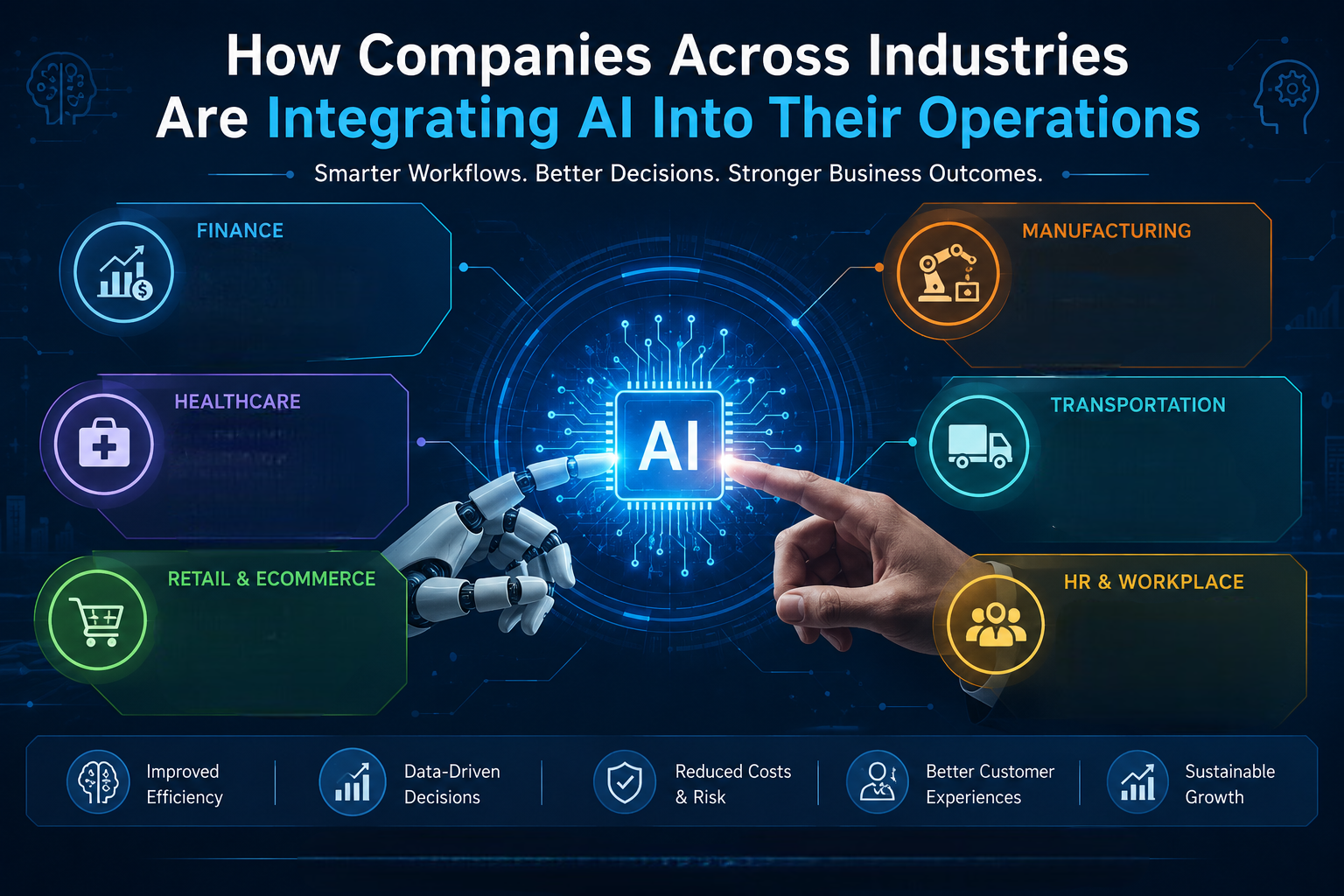
AI Is Becoming the Foundation of Modern Business Operations-
Artificial Intelligence has rapidly evolved from an emerging technology into a critical business tool that supports daily operations across industries. Organizations are leveraging AI to automate repetitive tasks, process large volumes of data, and improve decision-making at every level. What was once limited to technology companies is now being adopted by businesses of all sizes, from startups to multinational corporations. AI enables companies to operate more efficiently while reducing costs and minimizing human error. As competition increases, businesses are recognizing that AI is no longer optional but essential for maintaining a competitive edge. The ability to analyze data in real time allows organizations to respond quickly to market changes and customer demands. Additionally, AI-powered systems can identify patterns and opportunities that might otherwise go unnoticed. This transformation is reshaping traditional workflows and creating new standards for operational excellence. Companies that embrace AI early are positioning themselves for long-term success in an increasingly digital economy.
Key Benefits of AI in Operations:
- Automates repetitive and time-consuming tasks
- Improves operational efficiency
- Reduces human errors
AI Is Revolutionizing Customer Service and Sales-
Customer service and sales departments are among the biggest beneficiaries of AI adoption. Businesses are using AI-powered chatbots and virtual assistants to provide instant support and answer customer inquiries around the clock. These tools help companies reduce response times while improving customer satisfaction. In sales, AI analyzes customer behavior, identifies high-potential leads, and recommends personalized outreach strategies. Sales teams can spend less time on administrative tasks and more time building relationships with prospects. AI-driven insights also help organizations forecast sales trends and optimize revenue strategies. Personalized product recommendations and predictive analytics improve conversion rates and strengthen customer loyalty. As customer expectations continue to rise, AI is helping businesses deliver faster, smarter, and more personalized experiences. This combination of automation and personalization is becoming a major competitive advantage for modern organizations.
Common AI Applications in Sales and Customer Service:
- AI chatbots for customer support
- Lead scoring and qualification
- Personalized customer recommendations
AI Is Transforming Marketing and Human Resource Management-
Marketing teams are increasingly relying on AI to create more effective and data-driven campaigns. AI tools can analyze customer preferences, identify audience segments, and optimize content delivery across multiple channels. This enables marketers to deliver highly personalized experiences that improve engagement and conversion rates. At the same time, human resources departments are utilizing AI to streamline recruitment, onboarding, and employee development processes. AI can screen resumes, match candidates to job requirements, and reduce hiring biases when properly implemented. Organizations are also using AI to assess employee engagement and identify training opportunities. By automating routine administrative work, HR professionals can focus on strategic initiatives that improve workforce performance. The integration of AI into both marketing and HR demonstrates its versatility and growing importance across business functions. Companies that effectively leverage AI in these areas often experience higher productivity and stronger organizational outcomes.
AI Use Cases in Marketing and HR:
- Audience segmentation and targeting
- Content optimization and personalization
- Resume screening and candidate matching
AI Is Driving Efficiency in Finance, Manufacturing, and Supply Chains-
Industries that depend on accuracy, speed, and operational consistency are finding tremendous value in AI technologies. Financial institutions use AI to detect fraud, automate transaction processing, and improve risk assessment. Manufacturing companies employ AI-powered systems for predictive maintenance, quality control, and production optimization. By identifying potential equipment failures before they occur, manufacturers can reduce downtime and lower maintenance costs. Supply chain managers use AI to forecast demand, manage inventory levels, and optimize logistics routes. These capabilities help organizations respond more effectively to disruptions and changing market conditions. AI also provides real-time visibility into supply chain operations, allowing companies to make more informed decisions. As global markets become more complex, AI is helping businesses build resilience and maintain operational efficiency. The result is a more agile and data-driven approach to managing critical business processes.
AI Applications in Operations-Heavy Industries:
- Fraud detection and risk analysis
- Predictive maintenance
- Inventory optimization
- Demand forecasting
The Future of AI Integration and Business Growth-
The future of AI extends beyond automation and into intelligent decision-making. Businesses are increasingly exploring generative AI and autonomous AI agents that can perform complex, multi-step tasks with minimal human intervention. These technologies have the potential to transform how organizations manage workflows, analyze information, and interact with customers. However, successful AI adoption requires more than simply implementing new tools. Companies must invest in employee training, data quality, cybersecurity, and ethical AI practices. Organizations that establish strong governance frameworks will be better prepared to maximize AI’s benefits while minimizing potential risks. As AI capabilities continue to advance, businesses that embrace innovation will gain significant advantages in efficiency, productivity, and customer satisfaction. The next generation of AI-powered enterprises will be characterized by smarter processes, faster decision-making, and greater adaptability in a rapidly changing market environment.
Future Trends in AI Adoption:
- Generative AI for content and analysis
- Autonomous AI agents
- Advanced predictive analytics
AI Adoption Across Key Business Functions
| Business Function | AI Applications | Primary Benefits |
|---|---|---|
| Customer Service | Chatbots, Virtual Assistants | Faster support, 24/7 availability |
| Sales | Lead Scoring, Forecasting | Higher conversions, better productivity |
| Marketing | Personalization, Analytics | Improved engagement and ROI |
| Human Resources | Recruitment, Training | Faster hiring, employee development |
| Finance | Fraud Detection, Forecasting | Reduced risk, greater accuracy |
Conclusion-
Artificial Intelligence is fundamentally transforming how companies operate across industries. From customer service and sales to finance, manufacturing, and supply chain management, AI is helping organizations improve efficiency, reduce costs, and make more informed decisions. As technology continues to evolve, businesses are moving beyond basic automation toward intelligent systems capable of supporting strategic growth and innovation. While challenges such as data quality, security, and workforce adaptation remain important considerations, the long-term benefits of AI adoption are substantial. Organizations that invest in responsible AI implementation, employee development, and strong governance practices will be best positioned to thrive in the digital era.