
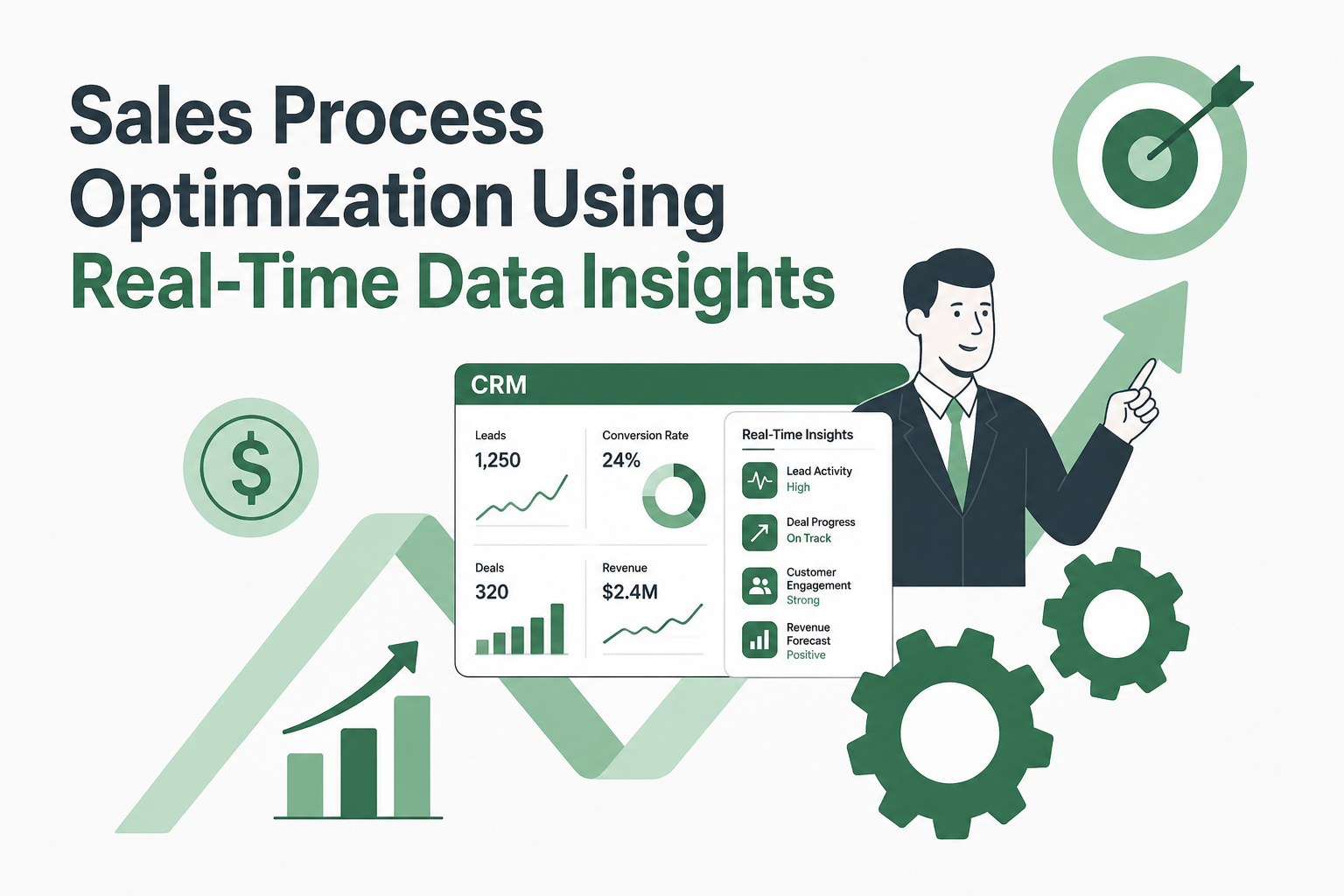
Sales Process Optimization has become essential for organizations seeking to improve efficiency, increase revenue, and deliver better customer experiences through data-driven decision-making. As buyer behavior becomes more complex and sales cycles continue to evolve, businesses can no longer rely solely on historical reports and intuition to make strategic decisions. Instead, organizations are leveraging real-time data insights to gain immediate visibility into customer activities, market trends, and sales performance. By utilizing up-to-date information, sales teams can identify opportunities faster, engage prospects more effectively, and make informed decisions that improve conversion rates and accelerate business growth.
In today’s digital-first environment, real-time data enables organizations to monitor customer interactions, analyze buying signals, and optimize every stage of the sales funnel. This proactive approach allows sales professionals to respond to customer needs at the right moment, resulting in stronger customer relationships, improved forecasting accuracy, and higher revenue generation. As a result, real-time sales analytics has become a fundamental component of modern Sales Process Optimization strategies.
The Growing Importance of Real-Time Data in Sales
Today’s buyers interact with multiple digital touchpoints before making a purchasing decision. They visit websites, download resources, engage with social media content, attend webinars, and compare multiple vendors before speaking with a sales representative. These interactions generate valuable data that can reveal customer interests, preferences, and buying intent.
Businesses investing in Sales Process Optimization gain better visibility into customer behavior and sales performance. Real-time sales analytics enables organizations to capture and analyze these signals instantly. Rather than waiting for weekly or monthly reports, sales teams can engage prospects when interest levels are highest. This immediate response capability helps businesses increase engagement rates and improve overall conversion performance.
Furthermore, real-time insights allow organizations to adapt quickly to changing market conditions. Whether responding to customer demand shifts, competitor activities, or industry trends, access to current information empowers sales leaders to make faster and more effective decisions.
How Real-Time Data Optimizes the Sales Process
Sales Process Optimization begins with identifying inefficiencies and understanding where opportunities exist throughout the customer journey. Real-time data provides continuous visibility into prospect activities, helping sales teams prioritize efforts and focus on high-value opportunities.
When prospects visit product pages, request demonstrations, interact with marketing content, or engage with email campaigns, these actions can be tracked and analyzed instantly. This enables sales representatives to identify high-intent leads and deliver timely, personalized outreach. As a result, organizations can reduce sales cycle lengths and improve conversion rates.
Real-time insights also improve collaboration between sales and marketing teams. Shared access to customer data ensures both departments work with the same information, creating a more consistent customer experience and supporting stronger revenue growth.
Key Benefits of Sales Process Optimization Through Real-Time Data
One of the primary goals of Sales Process Optimization is to eliminate inefficiencies and improve lead conversion rates. Organizations that successfully implement real-time sales analytics often experience measurable improvements across several performance areas.
- Improved Lead Qualification
Real-time behavioral insights help sales teams identify prospects who are actively researching solutions. By prioritizing high-intent leads, representatives can focus their efforts on opportunities that are most likely to convert.
- Better Forecasting Accuracy
Accurate forecasting is critical for sustainable business growth. Real-time pipeline visibility allows sales managers to monitor deal progression, evaluate performance trends, and generate more reliable revenue projections.
- Enhanced Customer Personalization
Modern buyers expect relevant and personalized interactions. Real-time customer data enables sales professionals to tailor conversations, recommendations, and solutions based on current customer interests and activities.
- Increased Sales Productivity
Automation and real-time analytics reduce administrative workloads, allowing sales representatives to spend more time building relationships, nurturing prospects, and closing deals.
Traditional Sales Processes vs. Real-Time Data-Driven Sales
The transition from traditional sales methods to data-driven selling has significantly transformed how organizations manage customer relationships and revenue generation.
| Sales Factor | Traditional Sales Approach | Real-Time Data-Driven Sales |
|---|---|---|
| Lead Qualification | Manual assessment | AI-assisted lead scoring |
| Customer Insights | Historical information | Live behavioral insights |
| Sales Forecasting | Periodic reporting | Continuous pipeline visibility |
| Response Time | Hours or days | Immediate engagement |
| Personalization | Generic messaging | Context-driven communication |
| Decision-Making | Reactive approach | Proactive approach |
| Productivity | Administrative-focused | Customer-focused selling |
| Revenue Growth | Gradual improvement | Accelerated growth |
Technologies Supporting Sales Process Optimization
Several technologies are helping organizations maximize the value of real-time sales intelligence. Customer Relationship Management (CRM) systems centralize customer information and provide a unified view of sales activities across the organization.
Advanced CRM and analytics platforms play a critical role in supporting Sales Process Optimization initiatives. Artificial Intelligence (AI) and Machine Learning (ML) technologies further enhance sales performance by identifying patterns, predicting customer behavior, and recommending next-best actions. Revenue intelligence platforms and analytics dashboards also provide deeper visibility into pipeline performance and sales effectiveness.
Organizations can further strengthen their strategies by leveraging tools from leading providers such as Salesforce, Google Analytics, and Microsoft Power BI for data collection, reporting, and performance analysis.
Best Practices for Implementing Real-Time Sales Analytics
To maximize the value of real-time sales data, organizations should establish clear objectives and align key performance indicators (KPIs) with business goals.
Successful Sales Process Optimization requires continuous monitoring of KPIs, customer engagement metrics, and pipeline performance. Metrics such as lead response time, conversion rate, opportunity velocity, and customer engagement scores provide valuable insights into overall sales effectiveness.
Businesses should also focus on integrating data from sales, marketing, customer support, and product usage systems. A unified data environment eliminates information silos and provides a comprehensive view of the customer journey. Additionally, investing in predictive analytics and automation tools can help organizations respond more effectively to emerging opportunities.
The Future of Sales Process Optimization
The future of sales is increasingly driven by artificial intelligence, predictive analytics, and automation technologies. Organizations are moving toward smarter sales processes that combine human expertise with machine-generated insights.
AI and predictive analytics are expected to further enhance Sales Process Optimization strategies across industries. AI-powered sales assistants can help representatives prepare for meetings, prioritize opportunities, and personalize customer interactions. Meanwhile, revenue intelligence platforms continue to provide deeper visibility into customer behavior and sales performance.
Businesses that embrace these technologies today will be better positioned to improve operational efficiency, accelerate revenue growth, and maintain a competitive advantage in an increasingly digital marketplace.
Conclusion
Ultimately, Sales Process Optimization powered by real-time data insights helps organizations increase productivity, improve forecasting accuracy, and drive sustainable revenue growth. By providing immediate access to customer behavior, pipeline activity, and performance metrics, real-time analytics enables smarter decision-making across the sales organization.
Companies that adopt a data-driven approach can improve lead qualification, enhance customer engagement, strengthen forecasting accuracy, and optimize overall sales performance. As technology continues to evolve, organizations that prioritize Sales Process Optimization will be better equipped to achieve long-term growth and market leadership.